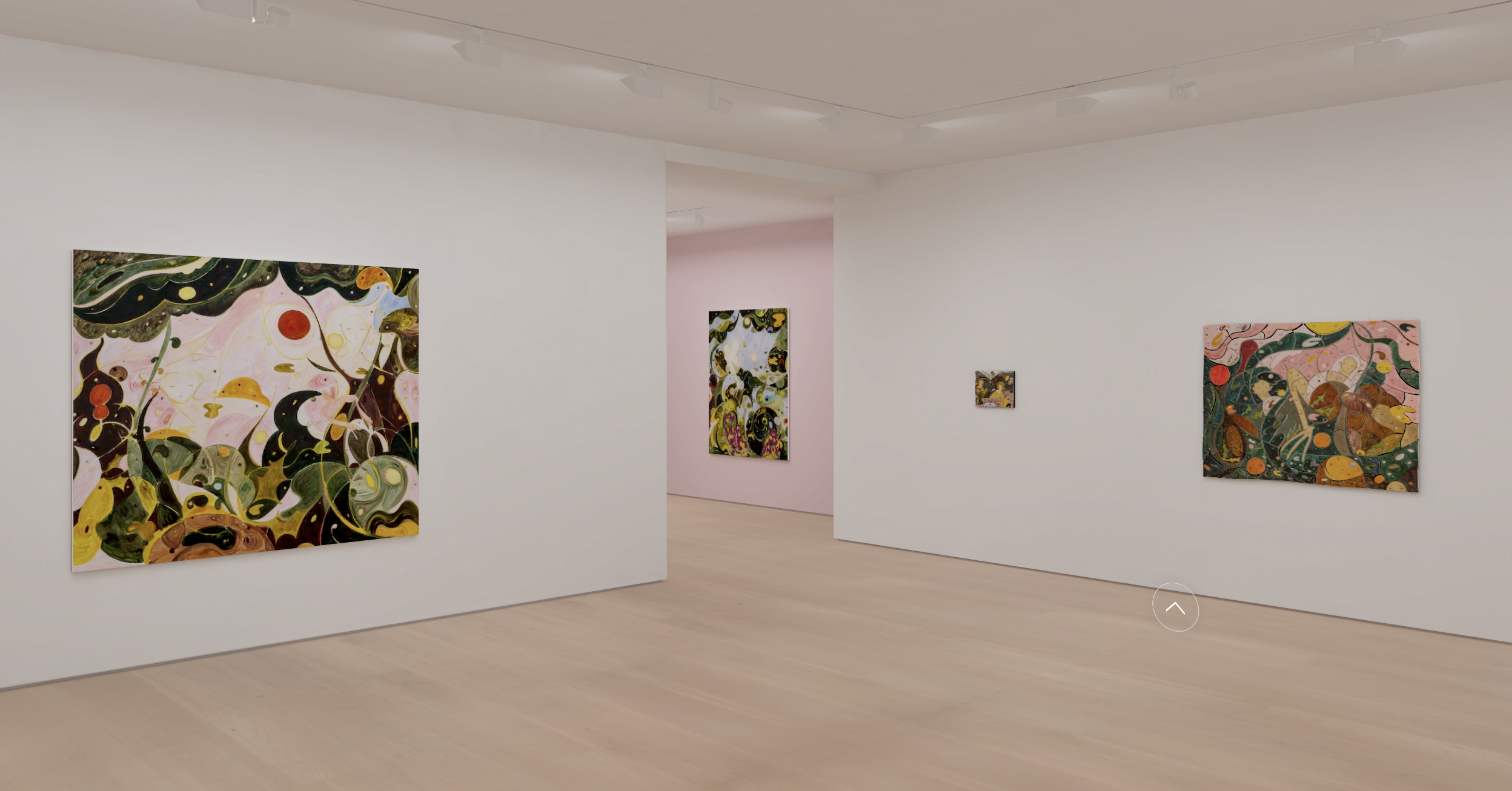
Entangled Pluralism
15 April - 30 June 2026
Victoria Miro Projects - Miro Presents, London
Victoria Miro Projects is delighted to present Entangled Pluralism by London-based artist Yulia Iosilzon. This is the twelfth project in an ongoing series of presentations by invited international artists.
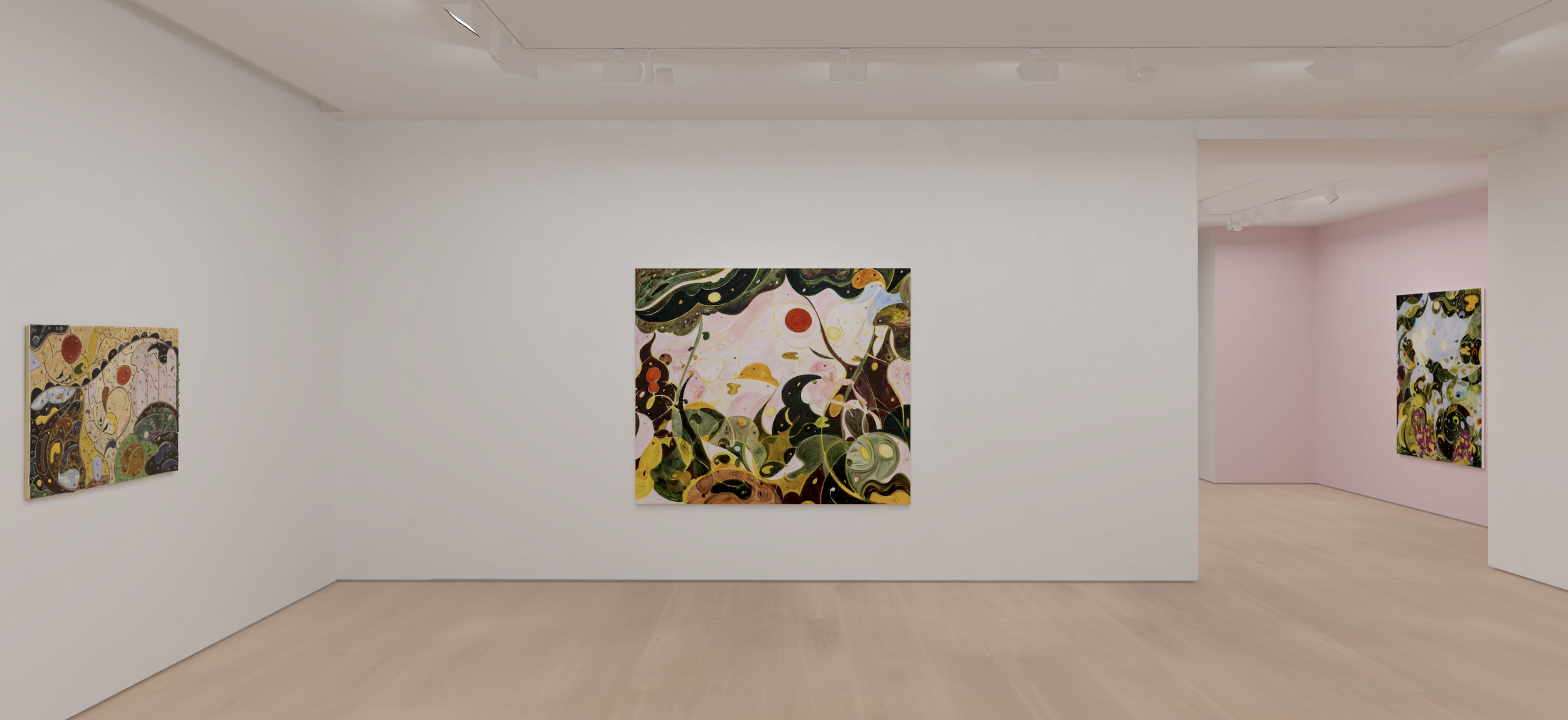
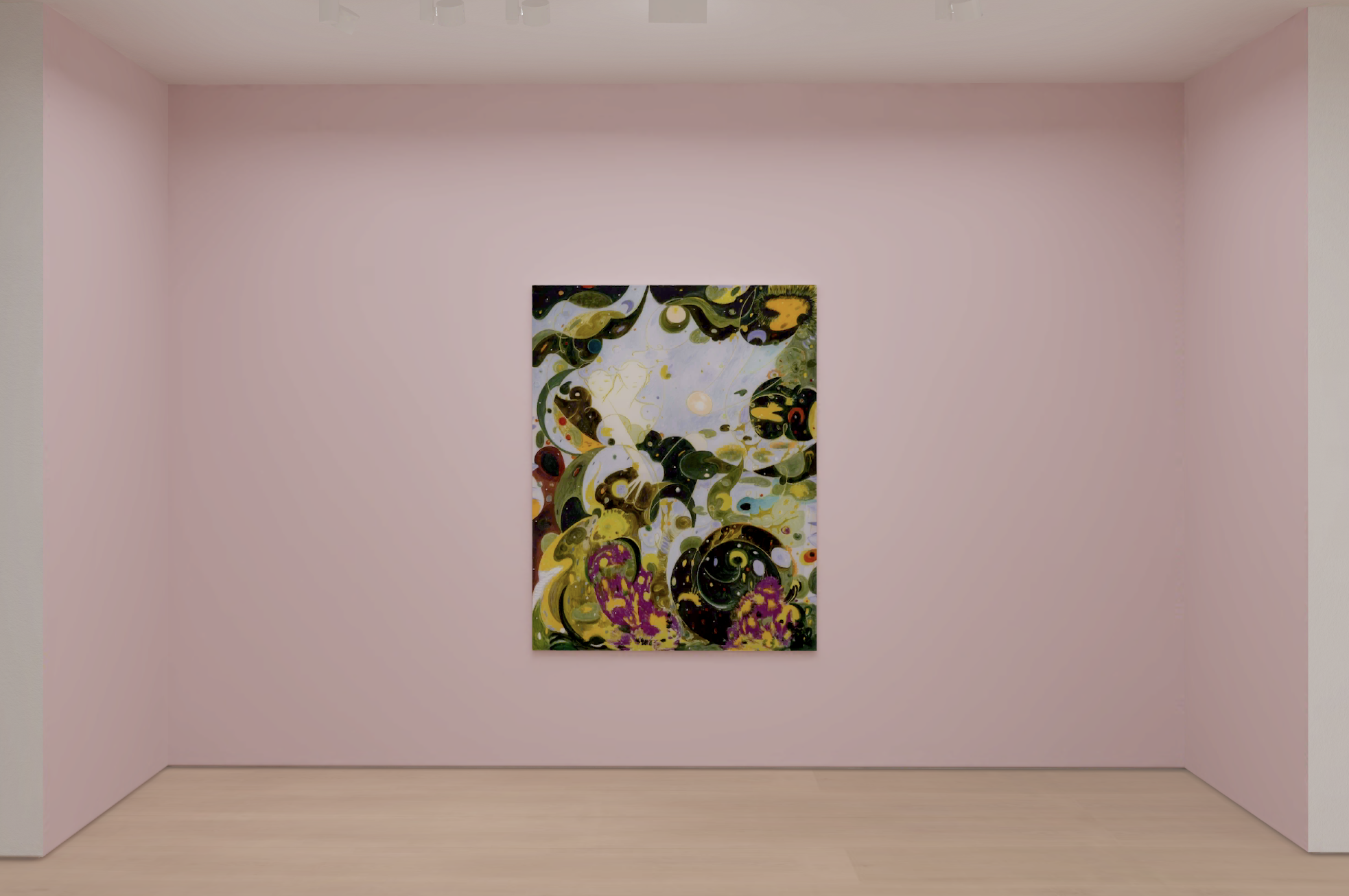
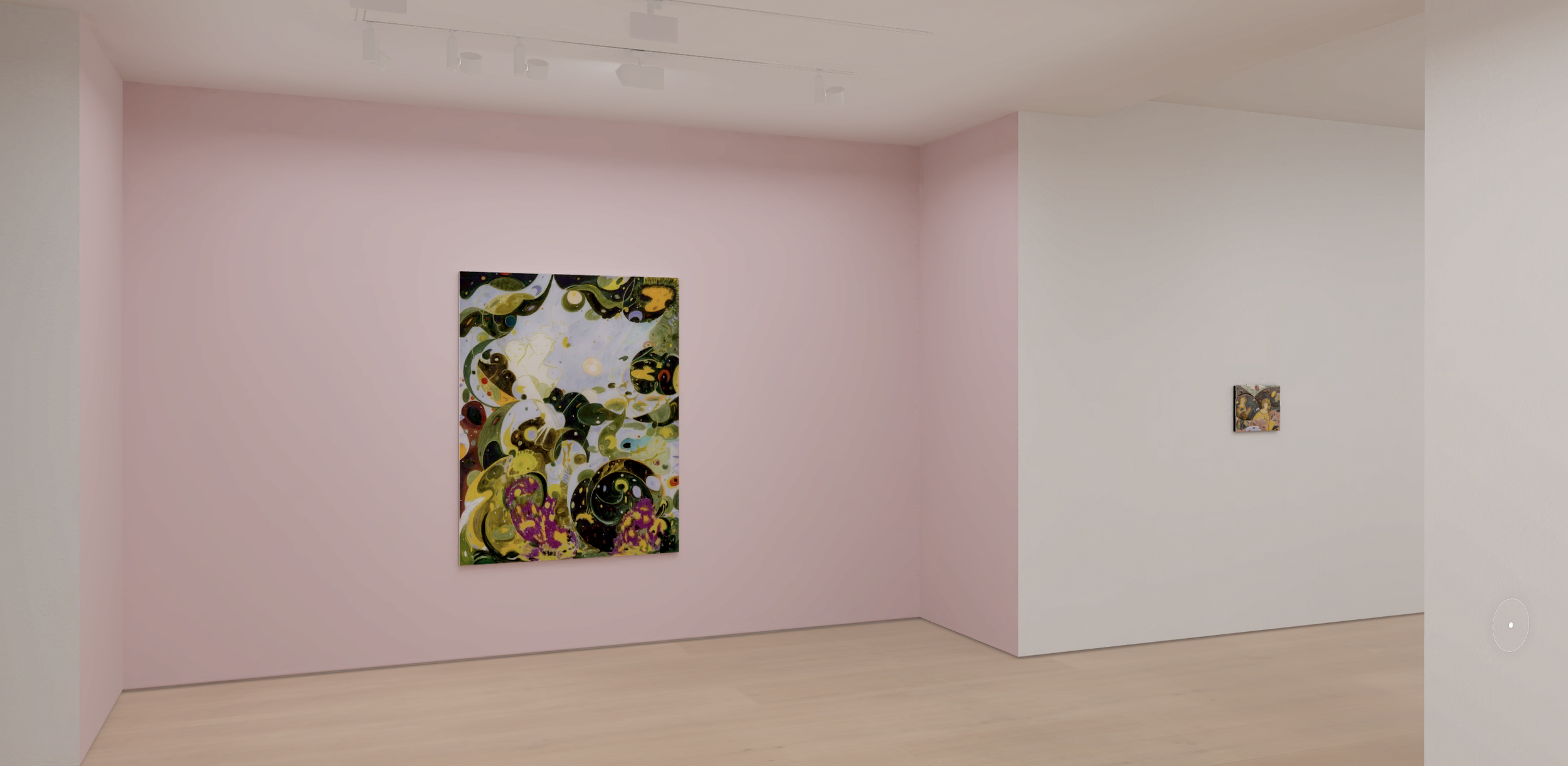
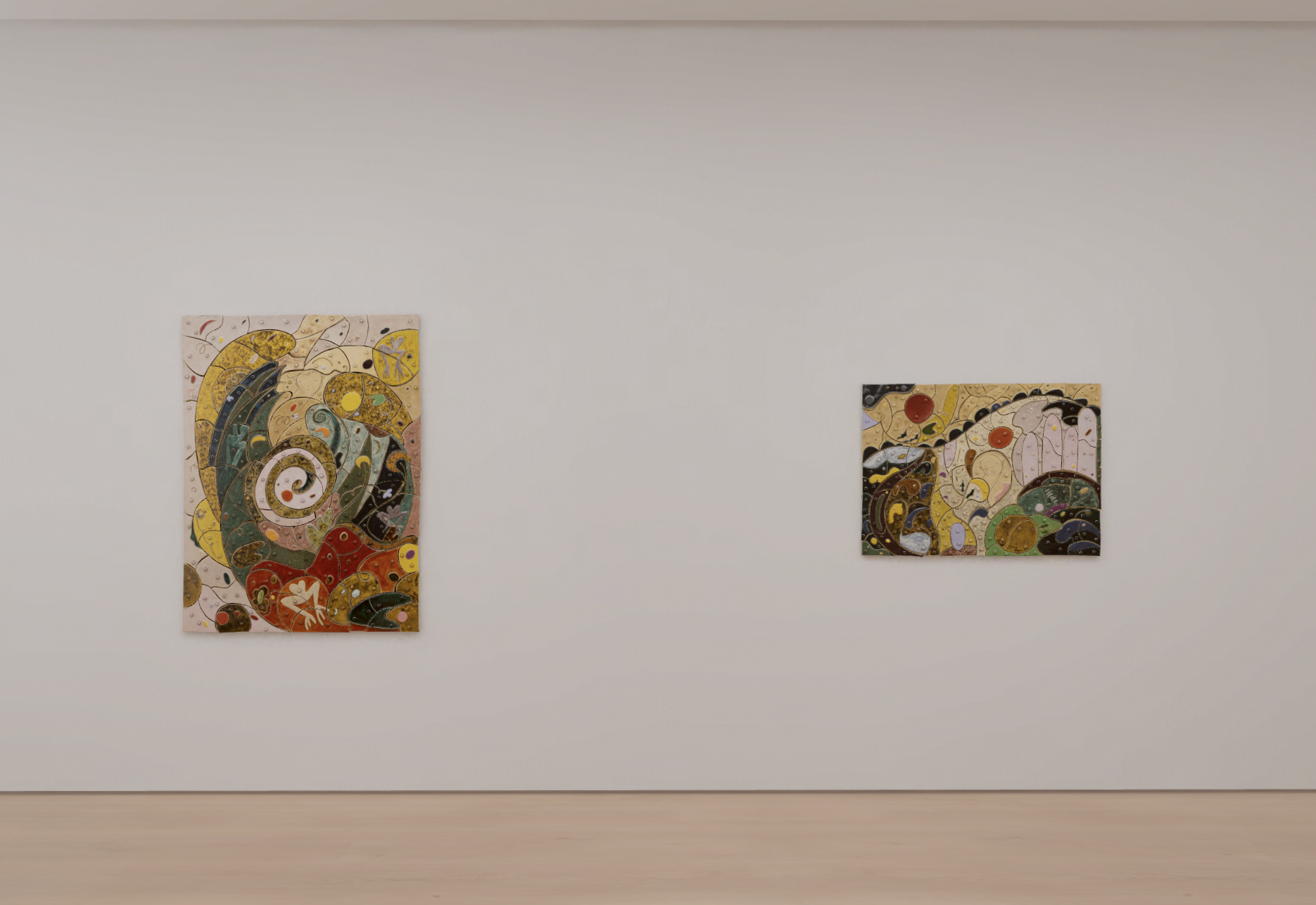
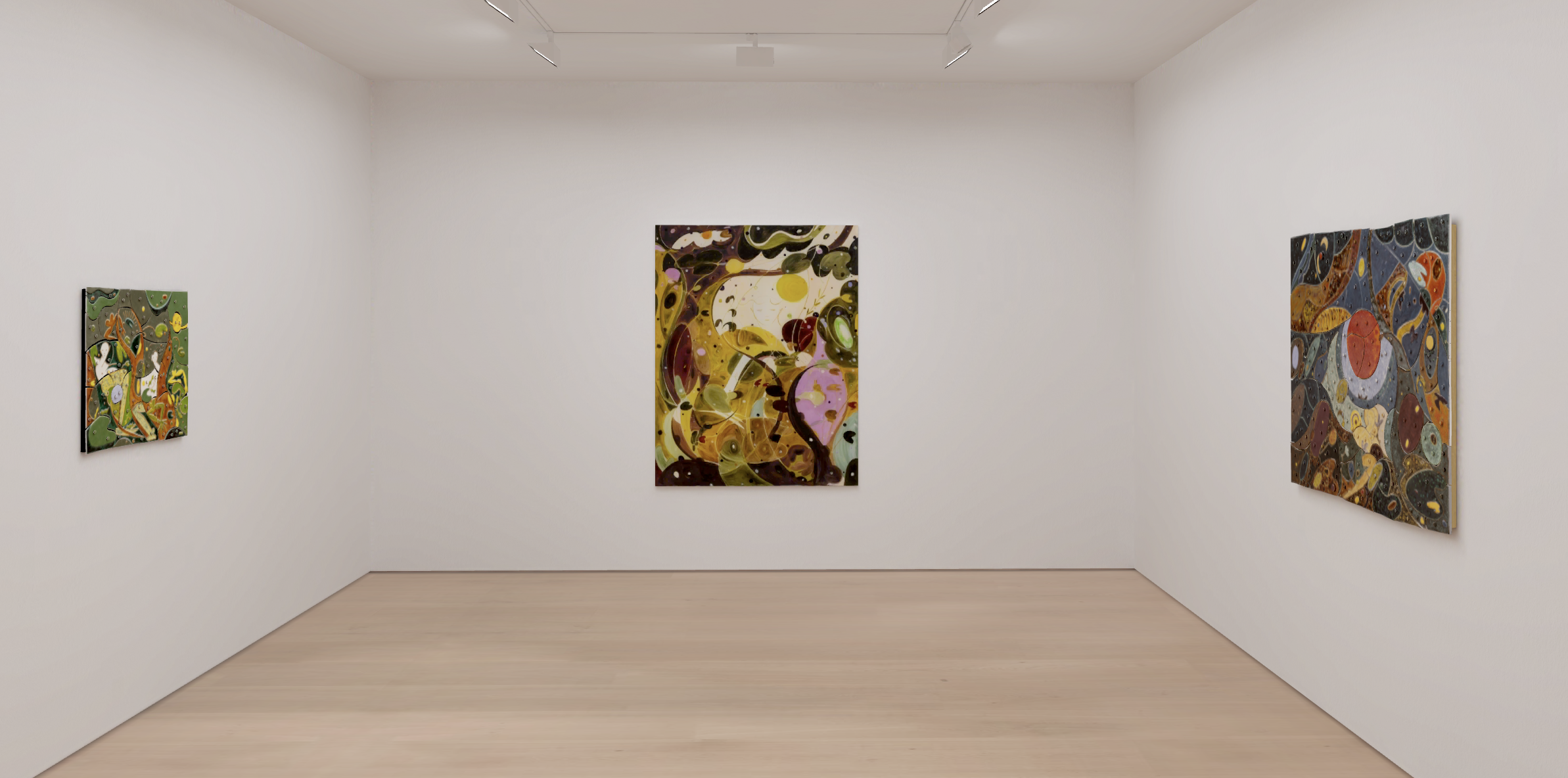
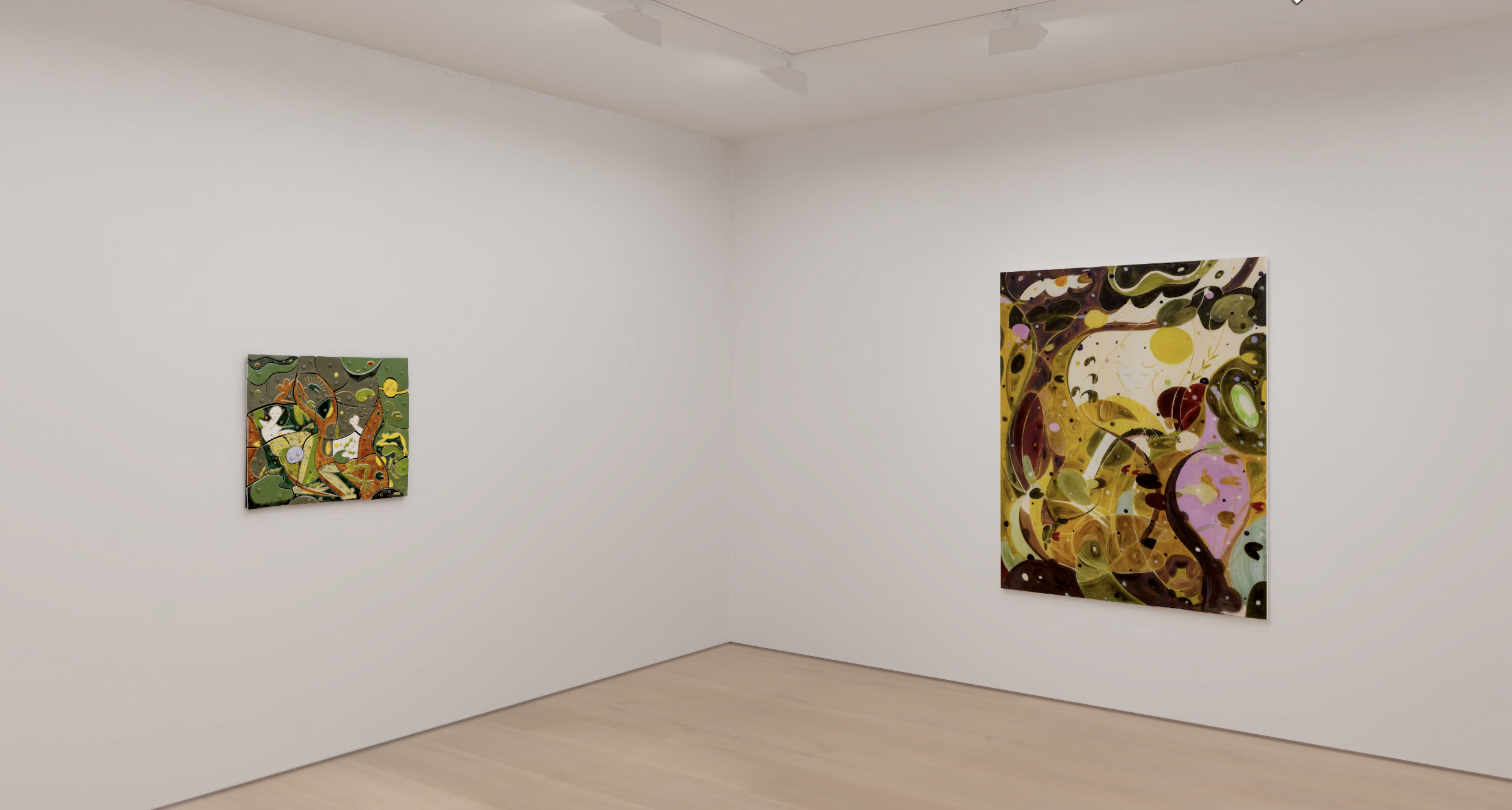
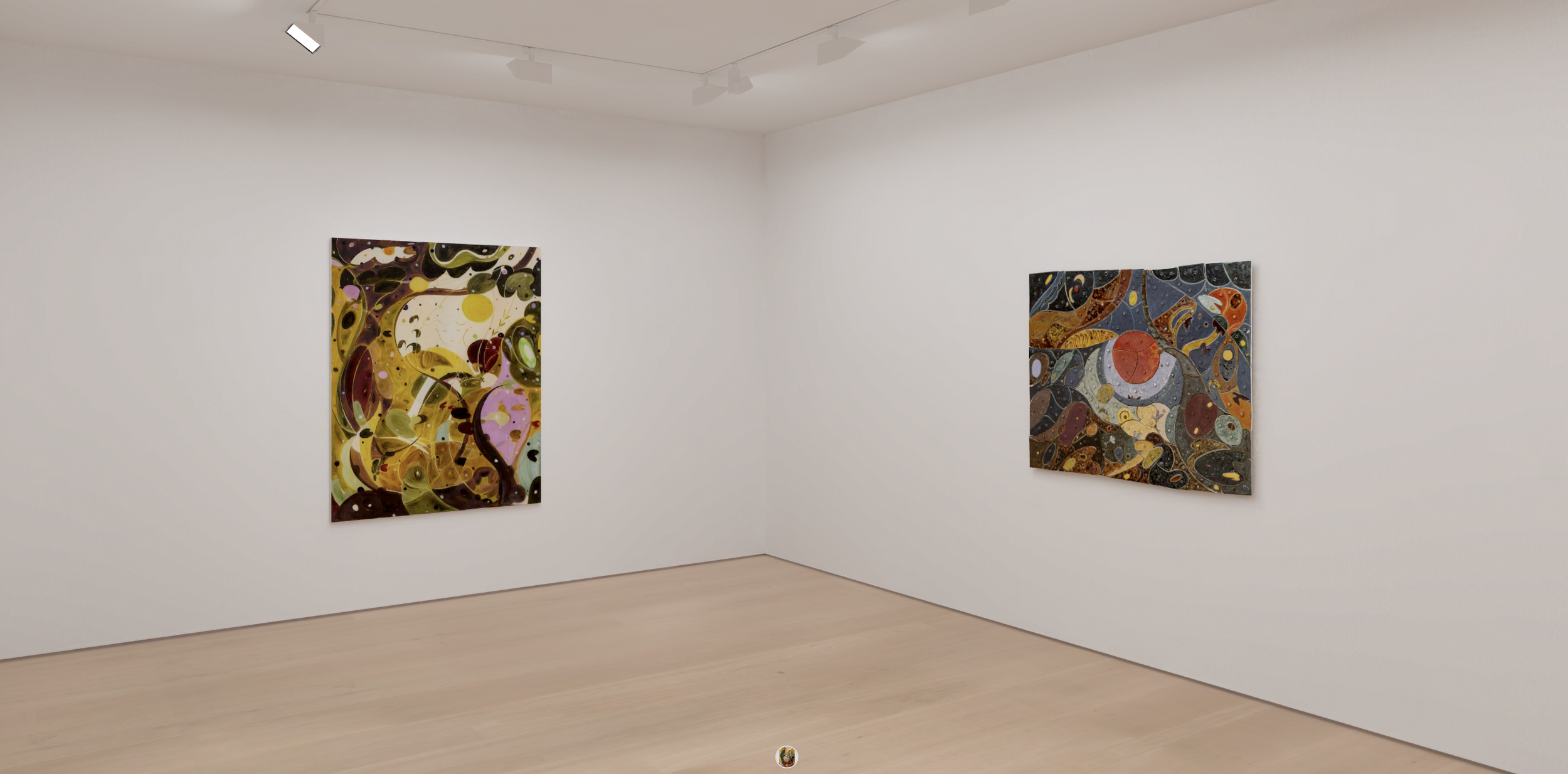
Working across painting and ceramics, Iosilzon constructs immersive environments in which figures and landscapes exist in a state of continuous transformation. Drawing on art historical, biblical and mythological references, her new body of work unfolds as fluid, allegorical spaces where narrative remains open and meaning emerges through association. Recurring motifs – such as suns, arcs and organic forms – shape compositions, animating the surface ‘almost like a living ecosystem of symbols and signs,’ says the artist.
Throughout the exhibition, figures appear as changeable presences within expansive, dreamlike terrains, while environments fold in on themselves, merging sky and landscape. ‘The original image is undone and remade, a possible metaphor for becoming, the opened-ended transformations of humans, animals and their environments towards which so much of Iosilzon’s practice is turned,’ writes Rebecca Birrell in a new text accompanying the exhibition.
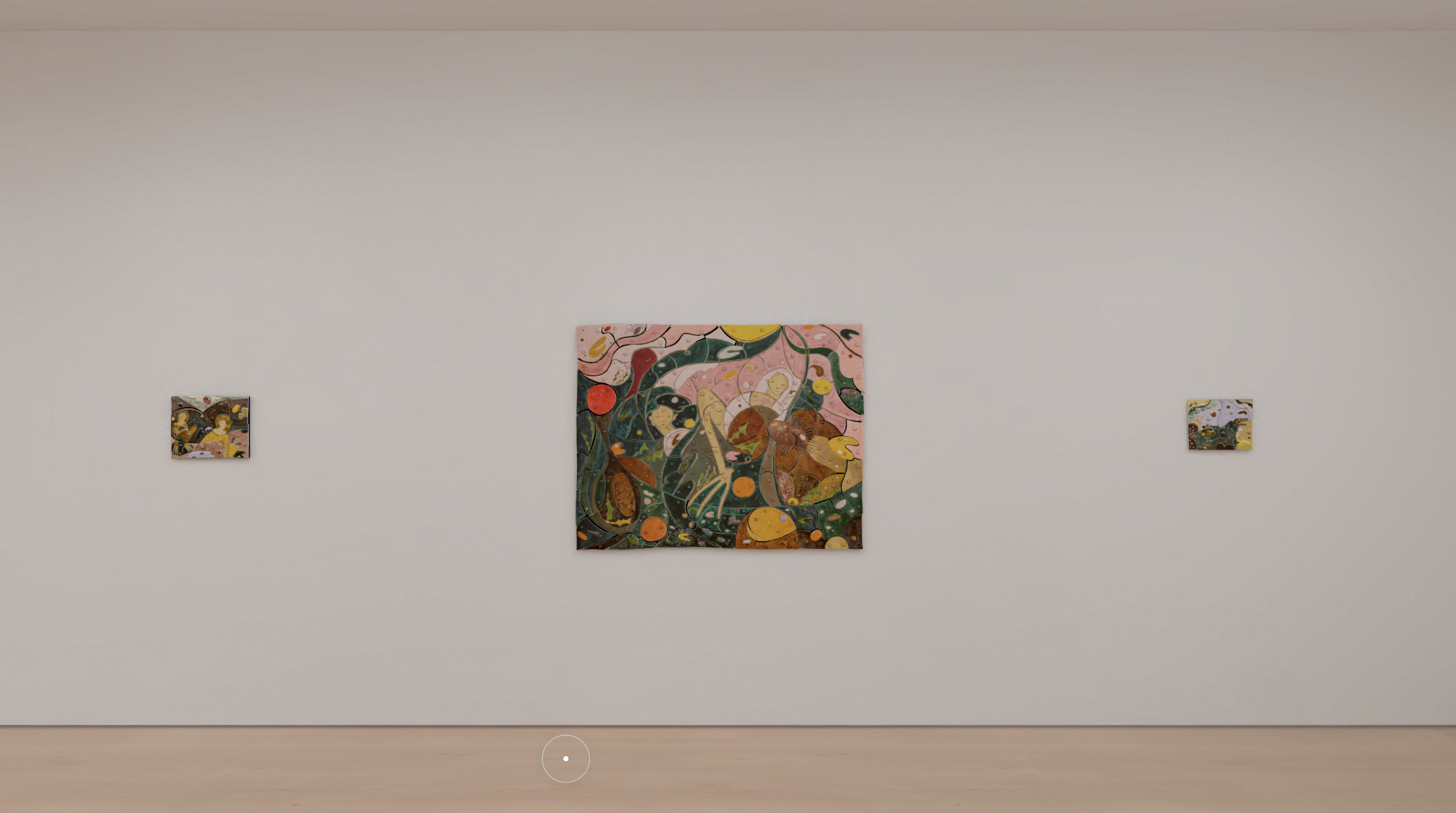
The specific method of painting onto individually shaped, ceramic tiles is a recent development for Iosilzon. ‘There is an element of surrender in the kiln, and like the soak-stain technique of Helen Frankenthaler — an important touchstone for Iosilzon – there is an openness to risk and its unexpected rewards,’ Birrell notes. These ceramic parts are then carefully assembled into structures that echo the artist’s initial drawings, a process that is ‘energised by [the] balance between the unpredictability of glaze experimentation and the necessary precision of the paintings’ architecture.’ Through these complex, interlocking forms, the works offer a continuously shifting field in which perception blurs and singular meaning remains out of reach.
EXHIBITION TEXT
Yulia Iosilzon: Entangled Pluralism
Rebecca Birrell considers the deeper histories in Yulia Iosilzon’s new paintings and ceramic works, which feature in the Victoria Miro Projects exhibition Entangled Pluralism.
Ceramic is a time-bearing medium. Whether a vessel is from twenty thousand years ago or the twenty-first century, it has the feel of a relic, a charged fragment of its age, evocative of all the experience it made possible and bore witness to. Perhaps ceramic has this distinctive historical aura — more obvious and intricate than painting — because of its versatility as a medium. These objects were treasured for their beauty, but they also had practical uses as containers for food and drink. In ancient times, they were surfaces for poetry and storytelling, suffused with the excitement and pleasure of those narratives. Ceramics were for nourishment and intoxication; they provoked and circulated emotion.
All these histories and meanings can be felt in Yulia Iosilzon’s new suite of ceramic paintings. Across these works, Iosilzon exploits the tension between the hardness of ceramic and the fluidity of the world she paints onto it. Faintly smiling faces of spectral human figures, sinuous green shapes suggestive of foliage, dots and dashes that might be pollen or algae, airborne or underwater: all these forms appear to float. This fantastical realm, which interweaves biblical and mythological imagery with flashes of magic and the supernatural, presided over by a feeling of transformation and possibility, is one which Iosilzon has developed across her body of work. But the specific method demanded by painting onto ceramic has been a more recent and invigorating development. Iosilzon sketches the painting in a notebook and proposes a colour scheme. The drawing is then divided into parts that will become the ceramic pieces that comprise the painting. The original image is undone and remade, a possible metaphor for becoming, the open-ended transformations of humans, animals and their environments towards which so much of Iosilzon’s practice is turned.
Experiment abounds in the kiln. Glazes are fired at deliberately wrong temperatures, layered with different densities, and the results are uncanny textures and strange chromatic admixtures. There is an element of surrender in the kiln, and like the soak-stain technique of Helen Frankenthaler — an important touchstone for Iosilzon — there is an openness to risk and its unexpected rewards. Pigment has a three-dimensional quality: it swells and cracks; it bubbles over into a scrim of perforations. Associations with plants, animals and meteorological effects swirl through these colours: there is tough, scaled skin and downy pelt; moss and mould; roiling mud and thick wedges of ice. These ceramic parts are then carefully assembled into a structure that echoes the composition’s visual organising principles, its sensuous curves and looping motion, instead of tracing its forms exactly. Iosilzon’s process is energised by this balance between the unpredictability of glaze experimentation and the necessary precision of the paintings’ architecture.
Iosilzon has always been interested in how painted surfaces interact with the materiality of their support. Her paintings on transparent fabric, which radiate light and accentuate the ephemerality of her forms, attest to this. What unites all the paintings in this presentation is their setting and guiding motifs. There is a theatricality, an exaggerated play with symbolism that more closely resembles how meaning is made on stage, inspired in particular by Japanese Kabuki theatre. Here nature is the protagonist: you feel its aliveness coursing through tentacular vines and biomorphic forms that rise as though to speak. In this series, a red sun hangs in the sky. In biblical texts, this symbol presages divine judgement and revelation. Maybe these are end times, and that’s why this land is so wild, why beauty is seeded with chaos, why the human figure has receded. But this vision feels too grave for Iosilzon. Her paintings are thresholds that transport us into a world of surprising transformations and play, and with the addition of ceramic, we might glimpse how this rich fantasy landscape reverberates with deeper histories.
Rebecca Birrell is an art historian, writer and curator. Her novel, Venus, Vanishing, will be published by Picador in the UK in July 2026 and Henry Holt in the US in October 2026. Her first book, This Dark Country: Women Artists, Still Life and Intimacy in the Early 20th Century was published by Bloomsbury in 2021. A Guardian/Observer Art Book of the Year 2021, it was described as ‘a striking act of collective empathy.’